
Transporter Mobile Application
Transportservice Terschelling
Transportmaster
Client: TransportMaster
Sector: Agrarisch transport / veevoer
Type: Bespoke web application
Stack: Vanilla JavaScript, HTML5, CSS3
A custom-built logistics planning application for a Dutch agricultural transport company, enabling planners to schedule driver routes, manage freight orders, and push instructions directly to on-board fleet computers — all from a single browser-based interface.
The company specialises in animal feed and bulk cargo transport. Their planners managed the weekly driver schedule — who drives where, carrying what, on which day — using a mix of spreadsheets and handwritten notes. Orders were tracked separately from the schedule, and any changes had to be communicated to drivers manually.
The goal was to consolidate everything into one purpose-built planning board: a live overview of the full week where orders can be assigned to the right driver and day, and driver instructions can be sent directly to in-cab fleet computers with a single click.
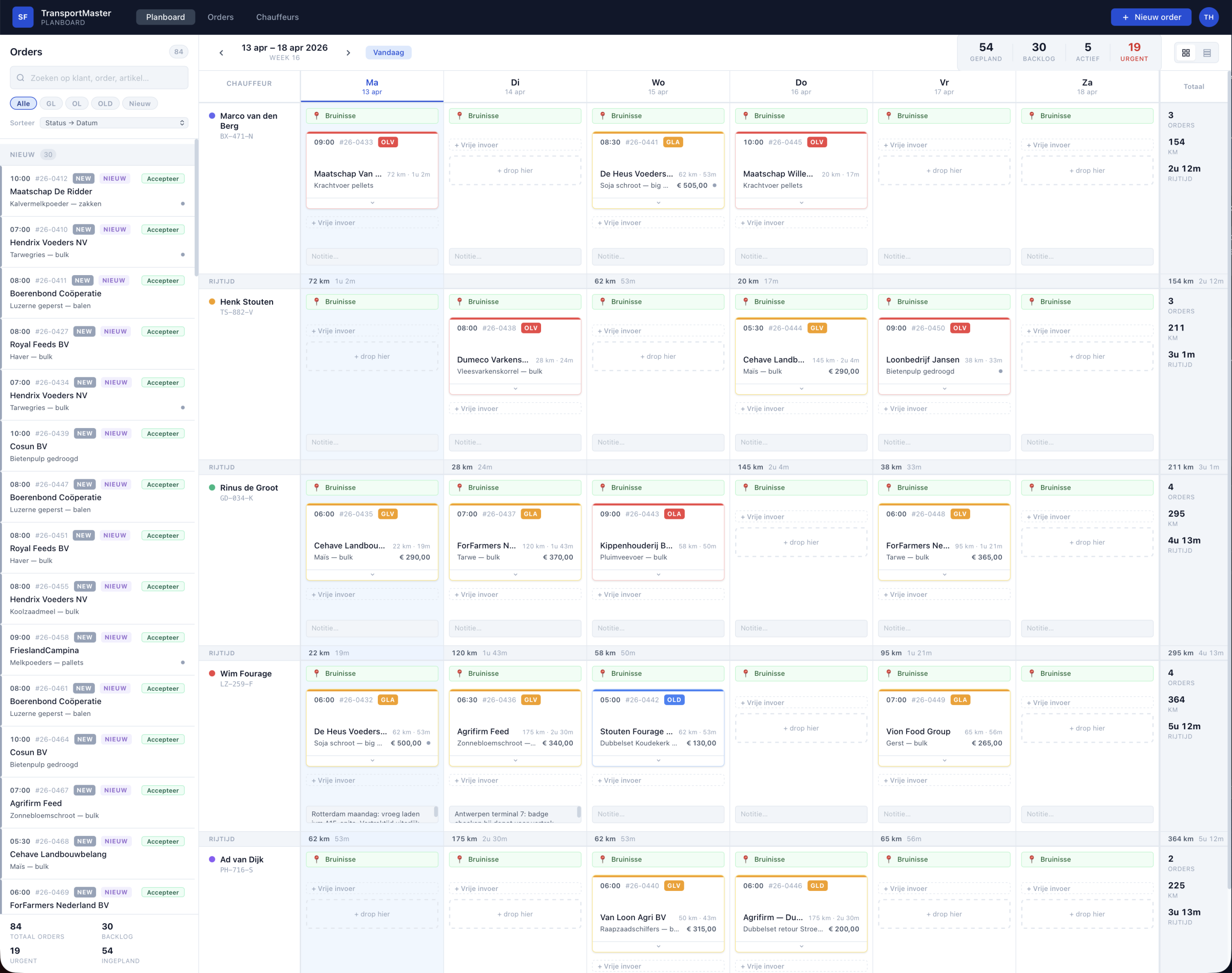
The interface is structured around a week-grid: drivers on the vertical axis, Monday through Saturday on the horizontal axis. A planner can see the entire week at a glance — which driver is scheduled where, how many kilometres they will cover that day, and which orders are still unassigned in the sidebar.
A consistent colour-coded status system gives instant visual feedback on every order card:
The design system is built entirely with CSS custom properties — a structured set of design tokens covering spacing, colour, typography, shadow, and animation timing. This ensures visual consistency across all components without relying on an external framework. Two view-density modes (compact and expanded) let planners switch between a high-level overview and a more detailed card layout depending on the screen size and the task at hand.
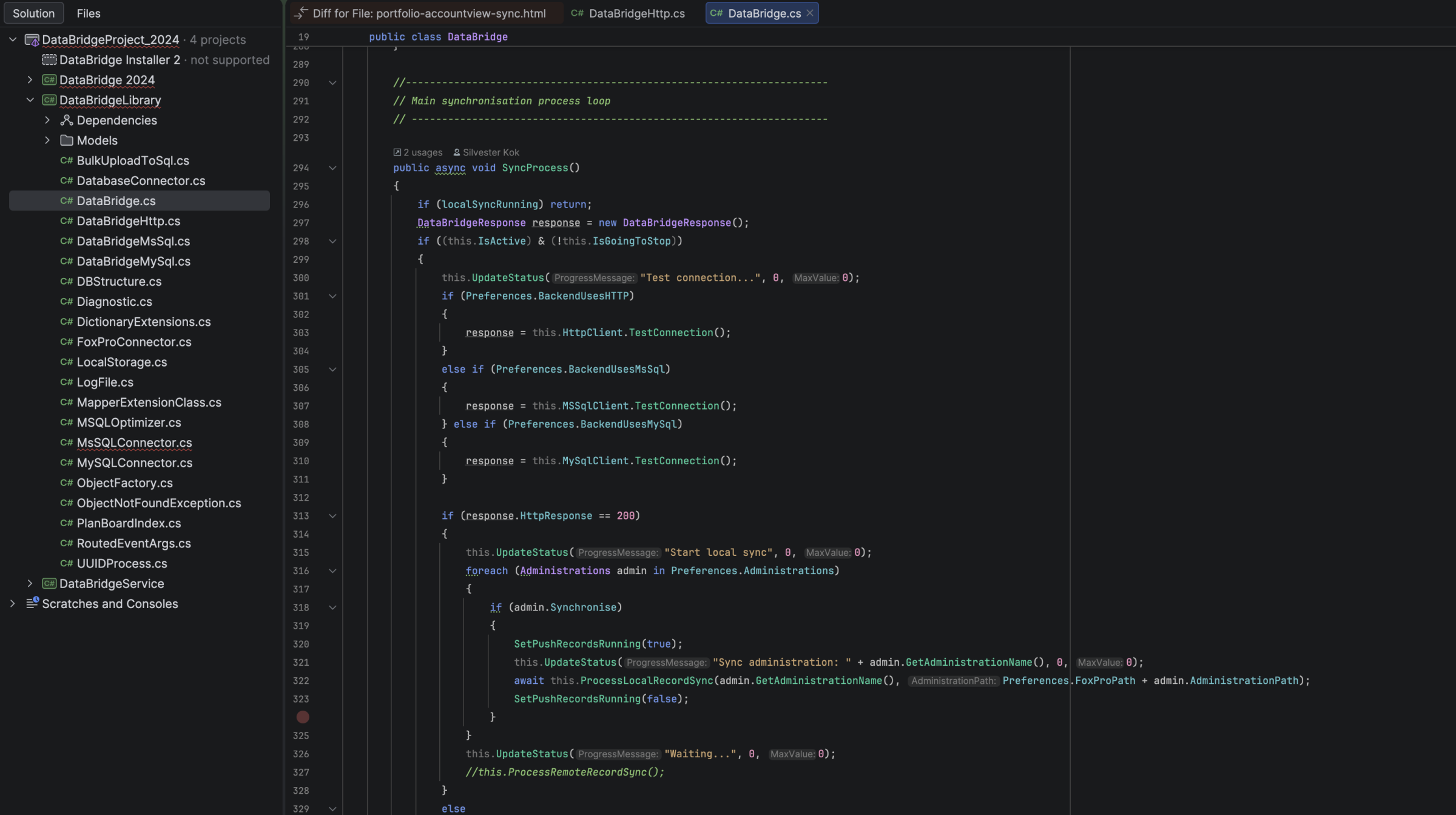
The application is written in pure vanilla JavaScript using native ES6 modules — no build tools, no bundlers, no third-party libraries. This was a deliberate choice: the result is a lightweight, maintainable codebase with zero dependency risk and no upgrade treadmill.
The architecture separates concerns into focused modules, each with a single responsibility:
The project was rebuilt from scratch — replacing a monolithic 2,800-line single-file prototype — into a structured, multi-file architecture that is straightforward to extend and hand off. Full developer documentation, including an API reference, is shipped alongside the application.
HTML5, CSS3 Custom Properties, CSS Grid, Flexbox, Vanilla JavaScript ES6, Native ES Modules, Web Drag & Drop API, localStorage, Promises / async–await, Pub/Sub event bus, Webfleet API.
No frameworks. No bundlers. No external libraries. The entire application runs directly in the browser, making it straightforward to host, deploy, and maintain.
Planners now have one tool that covers the full daily workflow: pulling in new orders, assigning them to drivers, reviewing the week at a glance, and sending route instructions to the cab — without switching between applications or systems.
Because the codebase is modular and the API layer is fully abstracted, connecting the application to a backend database or expanding it with new features is a straightforward next step that does not require rewriting existing logic.
More Work
Transportservice Terschelling
TransportMaster
TransportMaster